
International Meeting on Optical Biosensors
15-17 November 2018, Ghent, Belgium
In memory of Roger Y. Tsien on the 10th year anniversary of his Nobel prize

Organized by CNRS, ImaBio and IRC
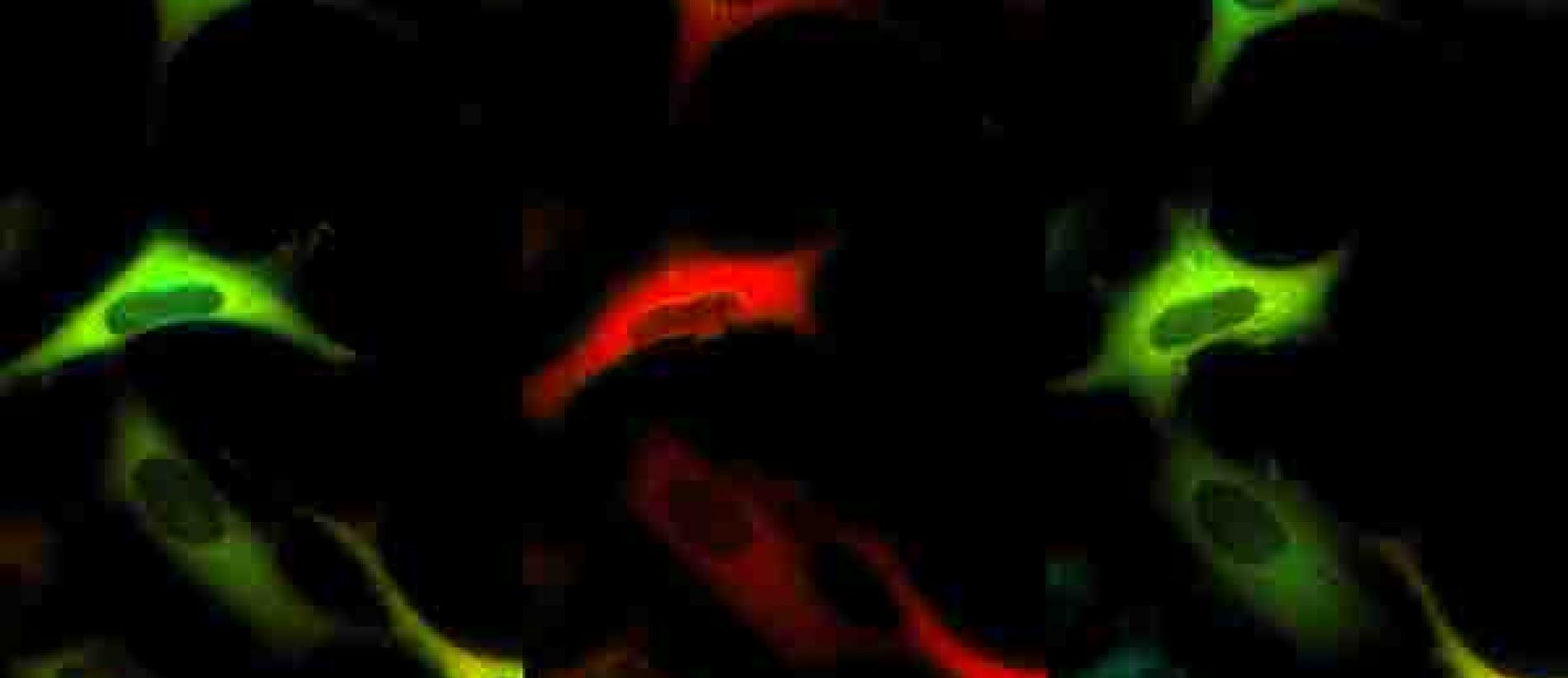
Biological processes show extreme complexity orchestrated both in space and time. To face this complexity, it has been necessary, as pointed out by R.Y. Tsien in his lecture "Unlocking Cell Secrets with Light Beams and Molecular Spies" (Heineken Prize for Biochemistry and Biophysics, 2002), to develop fluorescent spies in order to analyze, quantify in real time and decrypt very sophisticated cellular mechanisms. The recent explosion of fluorescent biosensors development opens a new field of investigation by allowing the analysis of extremely specific biological events at the level of cellular organelles, individual cells, tissues and even entire living organisms in physiological and pathological conditions. The development and the use of these tools require solving a number of conceptual, experimental and technological problems concerning both the biosensors themselves and the tools to follow them. Equally important, a range of new developments including optogenetic and optochemical tools allow systematic perturbation of biochemical processes while they are read out by optical biosensors.
The purpose of this conference is to gather and consolidate the expertise in the field of biosensors and to promote the reflection and the exchange of information so as to accelerate the development of these new dynamic imaging approaches in all areas of biology and biomedical sciences.
Poster information:
Format: A0 (841 x 1189 mm / 33.1 x 46.8 in), portrait orientation
The discovery of GFP and a tribute to the contributions of R.Y. Tsien
Chairs: Dr. Oliver Griesbeck and Dr. Fabienne Mérola
This session will feature the novel fluorescent proteins and their specific applications in biosensor imaging.
Tou Cheu Xiong: Iron live imaging in Arabidopsis thaliana,
Giulia Bertolin: Optimization of fluorophores and analysis approaches to ameliorate a FRET biosensor of the mitotic kinase AURKA,
Oleg Dyachok: Zn2+-SIGNALING IN INSULIN-SECRETING BETA-CELLS,
Timothy Dore: Photoactivatable dopamine to explore the function of dopaminergic neurons and circuits.
Chairs: Dr. May Morris and Dr. Alessandro Esposito
In this session we will hear about high-content screening applications and discuss the newest developments aimed at marrying FRET- and FLIM imaging in this context.
Chairs: Dr. Clotilde Randriamampita and Dr. Pierre Vincent
Imaging biosensors in a physiologically-relevant preparation can be challenging. This session will present a selection of biological discoveries in which biosensor imaging was instrumental.
Chairs: Pr. Franck Riquet and Pr. Juan Llopis
Better biosensors allow for more applications. This session will focus on how biosensor performances can be improved, in terms of signal, photostability, vectorization etc...
R Harkes: A gated solid-state camera for high throughput frequency domain FLIM measurements of cAMP dynamics,
Ana Clara Fernandes (Nikon): Bring high resolution, high content imaging to life,
Fabien Miart: Functional in vivo imaging of pH and Ca2+ dynamics in Arabidopsis thaliana growing seedlings using biosensors and the VIP-box,
Jochen Sieber (Leica): SP8 FALCON – a new approach for lifetime imaging.
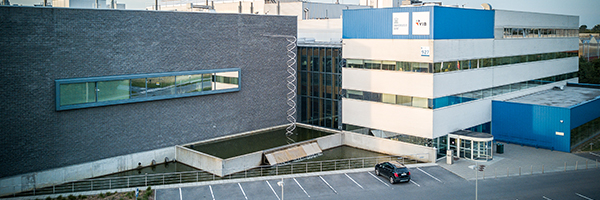
'Fiers-Schell-Van Montagu' building
Chairs: Dr. Saskia Lippens and Pr. Peter Dedecker
The pros and cons of the various detection instruments will be illustrated and discussed, as well as how the signal can be quantified and deemed relevant of a biological event.